Hardware & Software
A few real-world examples of the gear and software amateurs are running on the network today.
VHF Packet Node
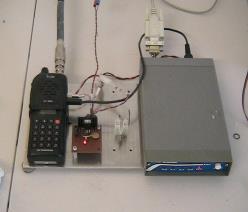
A low-power VHF packet node — part of a solar-powered installation in California. It pairs an Icom V82 commercial radio with a small regulated power supply and a terminal node controller (TNC) running a packet node EEPROM.
HF Packet
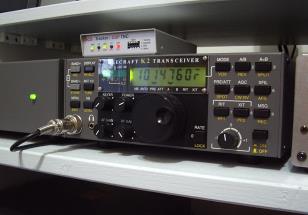
An HF packet installation built around an Elecraft K2 transceiver paired with a more advanced TNC — in this case an SCS Tracker / DSP TNC.
HF / VHF / Internet Packet — A BBS in Practice
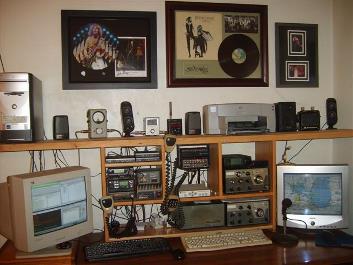
A BBS operated by N9PMO — a station that ties together packet on RF with internet-side tools for chat and message forwarding.
This setup incorporates BPQ32, the packet network switch software written by G8BPQ. Unlike many older packet networking packages, BPQ32 and BPQMailChat are still actively developed and supported.
G8BPQ BPQ32 Mail & Chat
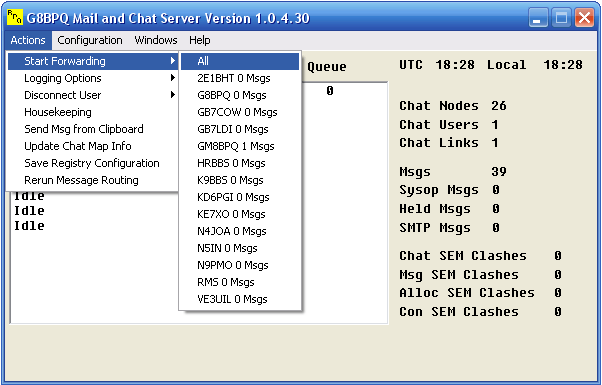
BPQ32 is the long-running packet network switch behind a large share of today's HF/VHF BBS infrastructure — handling message forwarding, chat linking between nodes, and housekeeping for sysops running a node or BBS. It remains one of the most actively maintained tools in the packet world.